RALPH LAUREN · GLOBAL PRODUCT LEADERSHIP · 2023–2024
Global Size & Fit
Clearer guidance at the point of purchase.
I led Ralph Lauren’s global size-and-fit redesign, bringing localized garment measurements and category body charts into the moments when customers choose a size.
Working with UX and Engineering, I used usability testing and behavioral analytics to shape the experience, defined regional behavior and missing-data fallbacks, and led requirements and delivery across product pages, Quickshop and wishlists.
Product lead — global size guidance and customer experience
Reported regional outcomes
- Conversion
+5%
- Revenue per visit
+7%
- Returns
−10%
Guidance where customers choose
Fit choices and size guidance sit together at the point of purchase.
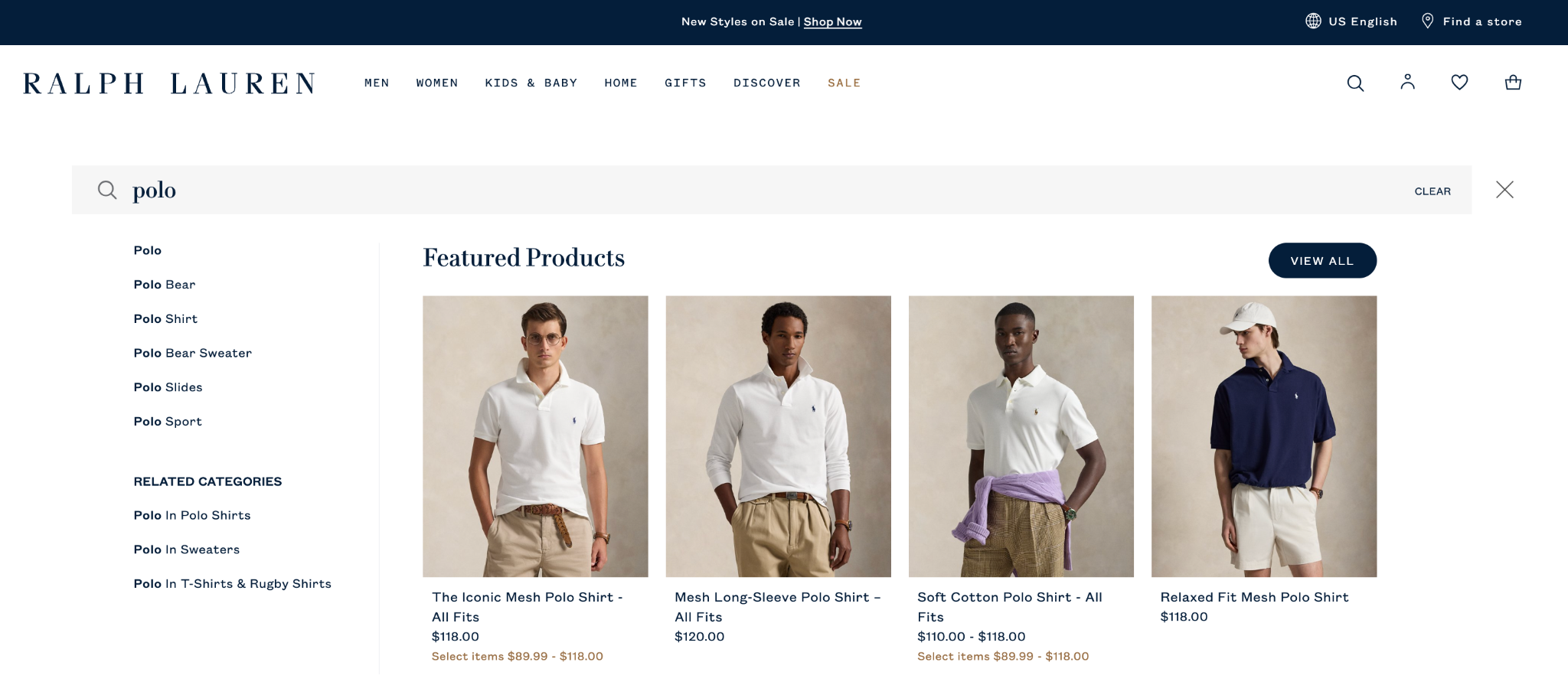
Product-page entry point
Fit Guide
Body guidance. Product measurements.
Help customers distinguish their body size from the dimensions of the garment.
Usability testing and behavioral analytics informed the guidance, regional behavior and missing-data fallback.
- Distinguish Body and Product
- Separate category body guidance from the measurements of the individual garment.
- Adapt to the market
- Configure measurement units, chart presentation and initial tab behavior for regional conventions.
- Cover missing measurements
- Show a relevant category body chart when product measurements are absent.
How the guidance works
Product-detail pages · Quickshop · Wishlists
QA coverage
- Regional chart and default-tab configuration
- Body-only fallback
- IN/CM controls
- Chart IDs and missing charts
- Customized-product category charts
- Staging/UAT and copy checks
- Quickshop and historical Quick Cart coverage
I owned Ralph Lauren’s guidance requirements around the existing True Fit vendor service, including compatibility and business enable/disable controls.
2024 design and QA reference
Problem & objectives
Help shoppers interpret the right sizing information at the point of decision.
Different products and markets need different guidance
Customers needed relevant sizing information across products, regional sizing conventions and shopping entry points. Legacy guidance did not adequately distinguish the measurements of an individual garment from the body measurements used to choose a size.
The redesigned experience needed to present both clearly and still provide useful guidance when product-specific garment measurements were unavailable.
- Garment measurements describe the individual product.
- Body charts provide category-level sizing guidance.
- Regional units and sizing conventions affect how both are interpreted.
Decisions & trade-offs
Combine garment and body guidance without making missing data a dead end.
Keep the two types of measurement distinct
Usability testing and behavioral analytics informed how we distinguished garment measurements from body guidance. I translated those inputs into requirements with UX and Engineering.
The unified modal separates Body and Product information, with measurement units, chart presentation and initial tab behavior configured for the market.
Define an explicit fallback
I defined a relevant category body-chart fallback when garment measurements were unavailable, including customized products. Regional configuration determined the initial tab when both charts were present; missing Product data supported a Body-only experience.
Work with the existing fit service
I accommodated the existing True Fit service within the redesigned experience, including modal presentation and business enable/disable controls.
True Fit provided the vendor fit service; my ownership covered Ralph Lauren’s size-chart and guidance experience around it.
Experience & systems
Resolve product, chart and market context into a useful guidance experience.
Product-specific data and category-level coverage
Chart selection connects the product and its category with regional configuration. Available garment measurements support Product guidance; missing measurements route to the category body chart.
Configuration covers chart IDs and coverage, default-tab preferences, IN/CM controls and missing-chart behavior, while preserving compatibility with existing fit tools and business controls.
- Localized measurements and sizing conventions
- Product-specific charts
- Appropriate category-body-chart fallback
- Compatibility with existing fit tools
- Business controls for the True Fit experience
Delivery & validation
Extend the guidance across shopping entry points and validate its regional behavior.
Bring charts into the shopping journey
I led requirements and delivery with UX and Engineering, extending the redesigned guidance across product-detail pages, Quickshop and wishlists.
- Product-detail pages
- Quickshop
- Wishlists
Regional design and QA coverage
Regional QA covered chart and default-tab configuration, Body-only fallback, IN/CM controls, chart IDs and missing charts, customized-product category charts, staging/UAT and copy checks. Historical QA also included Quick Cart.
Launch and further roadmap
The global size-guidance redesign launched across the scoped shopping entry points. The separate Size Guide Hub remained a roadmap opportunity and had not launched when I departed; the PLM-to-PIM-to-SFCC measurement flow remained exploratory. Neither was part of the launched redesign.
Outcomes & learning
Resolve fit uncertainty through information quality, placement and coverage.
North America
Reported outcomes associated with the size-and-fit improvements were +5% conversion and +7% revenue per visit in North America.
EMEA
EMEA reported 10% fewer returns associated with the size-and-fit improvements.
What I took forward
Resolving fit uncertainty depends on the quality of the information, where customers encounter it and how consistently it covers products and markets. Clear distinctions between garment and body guidance, localized presentation and useful fallbacks make the experience more dependable.